Designing An Intentional Workspace Optimized For Flow
When I redesigned my office this fall, I didn’t begin with an inspiration board or a collection of saved images. I began with intention. I wanted a space that reflected how I think, how I work, and how I move through the many roles I inhabit each day. Focused yet creative. Grounded yet imaginative. Analytical yet fluid. More than anything, I wanted a room that felt peaceful without ever becoming dull, a space that could both calm my nervous system and energize my mind.
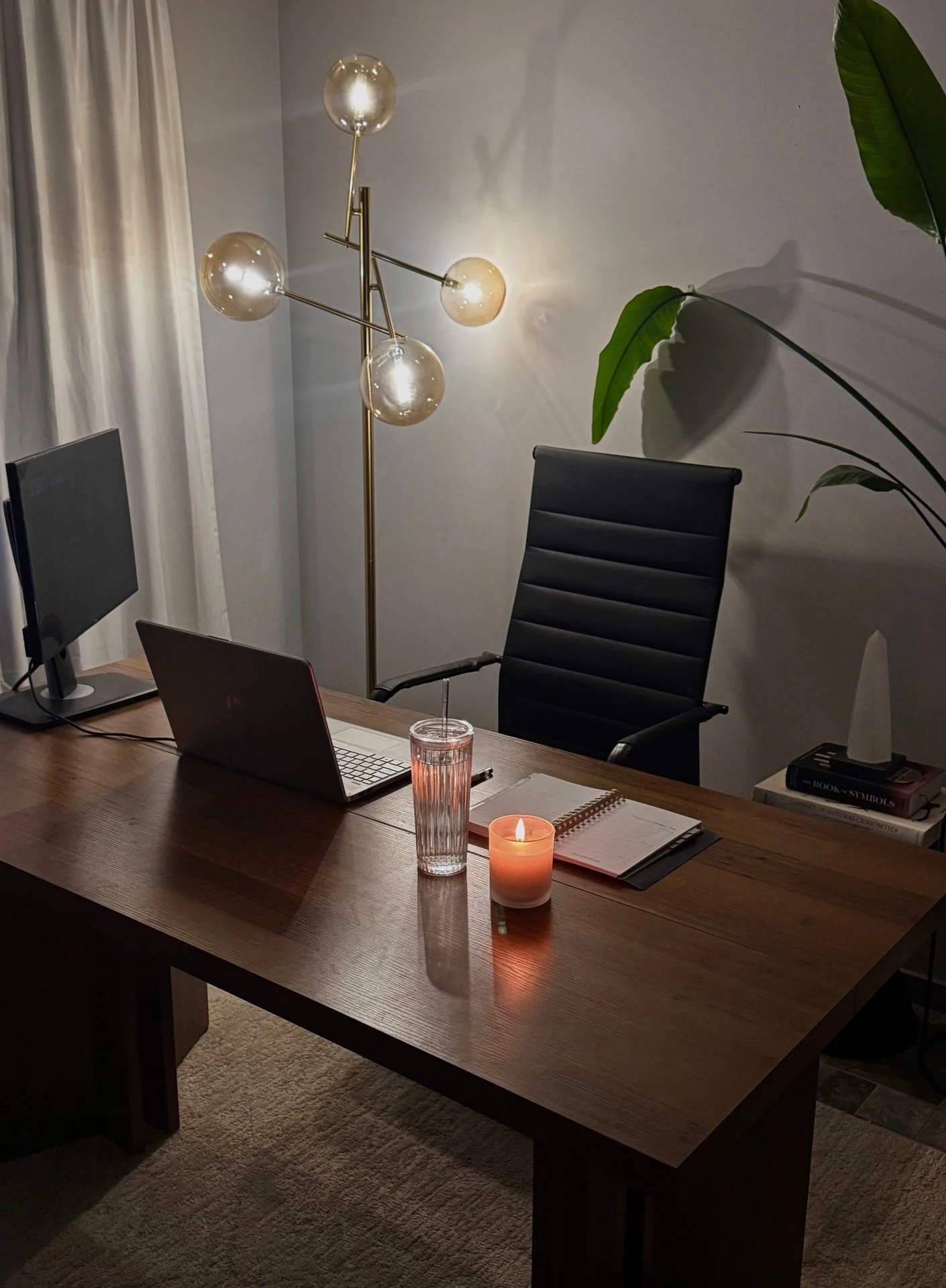
I approached the design almost like composing a recipe, layering elements that would influence not just the aesthetics of the room, but the way it would feel to inhabit. Warm wood anchored the space, introducing a quiet earthiness that echoed my brand and subtly tethered me back to the forest. The chair was chosen with equal care — something sleek but never cold, structured yet deeply comfortable, a place where I could sit cross-legged, lean back, or curl up as ideas unfolded.
Certain pieces carried emotional weight. A brass lollipop lamp I had admired since childhood became both light source and sculpture, an object that nodded to a playful, futuristic sensibility. A towering selenite crystal, luminous and architectural in form, introduced a presence that felt grounding and expansive at once. Nearby, stacks of well-loved creative books remained within reach, ready to offer moments of inspiration when the mind required nourishment rather than stimulation. A plant softened the room, quietly improving the air while offering a sense of companionship through long hours of work.
The palette and atmosphere evolved through similarly intentional gestures. A white rug opened the room visually, amplifying light and spaciousness. A humidifier infused the air with cedar, creating a subtle sensory anchor. Candlelight added warmth and rhythm, while the simple act of watching a flame offered a restorative pause between stretches of concentration. On the walls, deeply personal artifacts took their place: a map of the tiny island where I grew up and a painting composed of logos I had doodled since childhood. Together, they served as reminders of continuity — of the girl whose creativity existed long before it became profession, strategy, or structure.
Practical considerations were woven seamlessly into the design. One screen dedicated to design. One screen reserved for writing. A water bottle always within reach. A wool shawl draped over the chair for colder days. And perhaps most importantly, space for my children to sit beside me — to bring their laptops, fabrics, projects, and ideas into the same environment of making and imagining.
When the room was finally complete and I sat down to work, the shift was immediate. My nervous system seemed to exhale. The work felt lighter, less encumbered by subtle friction. Thoughts moved with greater clarity. For the first time in a long while, my environment felt like an ally rather than a backdrop. It reinforced something I have come to observe repeatedly: our surroundings are not passive containers. They actively shape how we think, feel, and create.
We often speak about time management, yet far less about energy management. And energy — not time — ultimately determines the depth, quality, and sustainability of our work. A space that feels heavy rarely suffers from clutter alone; it carries static, interruption, low-grade cognitive noise. A space designed with awareness, however, aligns with our internal rhythms, supporting focus, creativity, and regulation.
Space as Amplifier
A workspace functions as an amplifier of experience. Light, color, texture, scent, sound, and spatial arrangement operate as signals continuously interpreted by the nervous system. Research increasingly validates what intuition has long suggested: environmental conditions directly influence cognitive performance, emotional regulation, and creative capacity. The body reads a room before the mind consciously evaluates it, responding to cues of openness, safety, stimulation, or overwhelm.
Studies have demonstrated that lighting conditions affect both mood and ideation, that spatial openness influences abstract thinking, and that natural light supports alertness through circadian synchronization. Conversely, visual clutter has been associated with increased stress responses and diminished attentional control. These influences are often subtle, yet cumulative. Whether working from home or within a professional environment, the space should reflect the frequency you want your day — and your mind — to hold.
Begin With Sensation, Not Aesthetics
Balanced spaces begin not with visuals, but with sensation. Before selecting furniture or defining palettes, it is worth asking a more fundamental question: what do I want this space to evoke? Calm, focus, expansion, creative energy. Clarity at this stage transforms design into a sensory orchestration rather than a purely aesthetic exercise.
Visual inputs shape cognitive load. Soft neutrals, natural tones, and organic textures help regulate stimulation and reduce mental fatigue. Auditory environments influence nervous system state, with silence, ambient soundscapes, or music each offering distinct effects depending on the task and temperament. Scent acts rapidly on physiology, where grounding notes such as cedar, eucalyptus, or bergamot can support focus and presence. Tactile comfort, often underestimated, contributes directly to cognitive endurance and depth of concentration. When sensory inputs align cohesively, the environment begins working with the body rather than competing for its attention.
Design Beyond the Physical
Energetic design extends seamlessly into digital space. Desktops crowded with files, excessive browser tabs, persistent notifications, and visual noise fragment attention and generate micro-stress. These seemingly minor interruptions accumulate as cognitive fatigue, subtly eroding depth of focus. Curating digital environments — simplifying folders, reducing visual clutter, selecting calming backgrounds — creates continuity between physical surroundings and mental state. Every interface engaged throughout the day participates in shaping attention, clarity, and emotional tone.
Micro-Rituals for Alignment
Transformation does not always require a complete redesign. It begins with awareness. Before starting work, a brief pause can recalibrate the relationship between body and environment. Scan the room. Notice its atmosphere. Adjust lighting. Introduce sound. Prepare water. Light a candle or diffuse a grounding scent. These small rituals signal readiness, safety, and intention to the nervous system.
Conscious design is ultimately an act of self-respect. It communicates that your focus, comfort, and creative capacity are worthy of care. A well-tuned environment does not merely look beautiful; it quietly supports the work, thinking, and presence unfolding within it.